How often should you remove tartar? Importance of professional teeth cleaning
March 12, 2026
What Damages Teeth After 30 – Habits Most People Ignore
May 19, 2026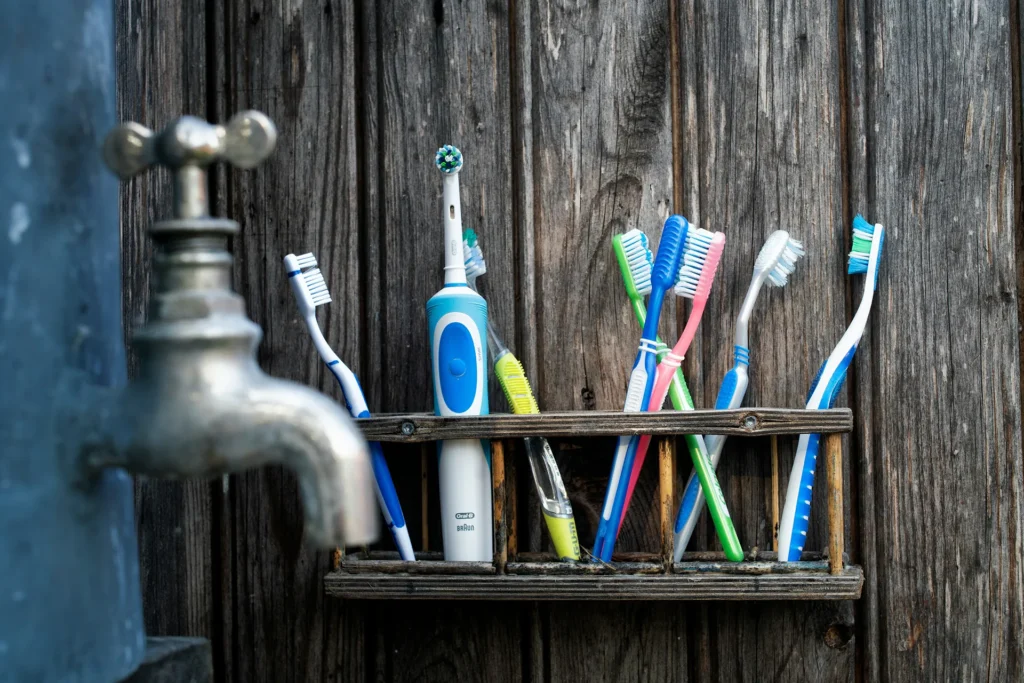
Electric or Manual Toothbrush — Which One Actually Cleans Better?
Brushing your teeth is a habit most of us perform on autopilot — every morning and evening, without much thought. And it's precisely that routine that stops us from asking: are we doing it the right way, and with the right tool?
Over the past few years, electric toothbrushes have become increasingly common, and dentists recommend them more and more often. Still, many patients rightfully ask: is an electric toothbrush actually better, or is it just clever marketing?
The answer isn't straightforward — it depends on your habits, technique, and individual needs. Below, we explain the differences between the two types of toothbrushes, what research shows, and how to make the right choice for yourself.
How Does a Manual Toothbrush Work?
The manual toothbrush remains the most widely used oral hygiene tool in the world. Its effectiveness depends entirely on the user — the pressure applied, the speed, the duration, and the brushing technique.
When used correctly, a manual toothbrush can be very effective. The problem is that most people don't use it correctly. The most common mistakes include: pressing too hard and damaging the gums, brushing for less than two minutes, using horizontal scrubbing motions instead of gentle circular ones, and skipping hard-to-reach areas such as the inner surfaces of teeth and back molars.
How Does an Electric Toothbrush Work?
An electric toothbrush does most of the work for you. Thanks to rotational, oscillating, or sonic movements, the brush head makes thousands of strokes per minute while the user simply glides it slowly from one tooth to the next.
In addition, most quality models include a built-in timer that signals when the recommended two minutes have passed, as well as a pressure sensor that alerts you when you're pressing too hard against a tooth or the gums. Both features make a significant difference in everyday use.
What Does the Research Say?
Numerous clinical studies have compared the effectiveness of electric and manual toothbrushes. The results consistently show that electric toothbrushes remove dental plaque more efficiently and reduce gum inflammation more effectively than manual ones — especially among people who haven't developed a proper brushing technique.
Advantages of an Electric Toothbrush
An electric toothbrush offers several concrete benefits in daily use:
More effective plaque removal. The higher number of strokes per minute means more thorough cleaning, especially in hard-to-reach areas.
Easier to use. There's no need to worry about technique — simply position the brush correctly and move it slowly. This is particularly helpful for children, older adults, and patients with limited hand mobility.
Built-in timer. Research shows that most people brush for far less time than recommended. A timer solves this automatically.
Pressure sensor. Protects the enamel and gums from mechanical damage caused by brushing too hard.
Better motivation. Many patients report that an electric toothbrush gives them a sense of a more thorough clean, which encourages them to be more consistent.
Disadvantages of an Electric Toothbrush
An electric toothbrush isn't the perfect fit for everyone. Brush heads need to be replaced regularly, the battery needs charging, and quality models can be significantly more expensive than manual ones. Some users also need time to get used to the vibration and sound, and they're somewhat less convenient for travel.
Advantages of a Manual Toothbrush
A manual toothbrush has its own merits — it's not simply a compromise. It's available everywhere, requires no charging, is lightweight and travel-friendly, and when used with proper technique, is perfectly sufficient for good oral hygiene. The cost is negligible compared to electric models.
Which Toothbrush Is Right for You?
An electric toothbrush is especially recommended for:
- people who are unsure about their brushing technique
- children who find it harder to adopt correct brushing movements
- patients with gum problems or a higher susceptibility to cavities
- users of orthodontic braces, dental implants, or crowns
A manual toothbrush is perfectly adequate for people who have mastered proper technique, brush for a full two minutes consistently, and don't skip the spaces between teeth.
Proper Technique — Regardless of the Toothbrush
No toothbrush can compensate for poor habits. The fundamentals of good oral hygiene remain the same:
- Brush at least twice a day, for a minimum of two minutes each time.
- Use gentle circular motions and hold the brush at approximately 45° toward the gum line.
- Don't press too hard — more pressure doesn't mean better cleaning.
- Don't forget the inner surfaces of your teeth, your back molars, and your tongue.
- Use dental floss or interdental brushes once a day.
- Replace your toothbrush (or brush head) every two to three months.
An electric toothbrush is more effective in most cases — but it's not a prerequisite for healthy teeth. Consistency, proper technique, and regular dental check-ups matter more than the choice of tool.
If you're unsure which model suits you, or have specific concerns related to gum health, implants, or braces, feel free to reach out. At Dr. Rakić's practice, we're happy to help you find the solution that works best for you.
Schedule an appointment and get personalised advice on your oral hygiene routine.
Call us and book your visit